

The harder part is choosing the right format. A summer language course, a host family and a term at a boarding school are very different experiences, and the difference shows when your child comes home. Here is how French immersion works (our French immersion programme is one example), what each format really delivers, and the questions to ask before you enrol.
What French immersion really means
The word is used for almost any stay abroad. Real immersion follows one simple rule: French is not one subject among others, it is the language of everyday life. Students hear it at breakfast, use it in geography lessons and need it to agree on what to do at the weekend.
That is what separates immersion from an intensive course. In a course, a student learns French. In immersion, they use it, because there is no other way to be understood. And that daily need is exactly what drives progress.
French immersion options: three formats compared
Families looking for French immersion in France or Switzerland usually choose between three options. None is wrong in itself, but they do not serve the same goal.
| Format | Typical length | What it offers | Its limit |
|---|---|---|---|
| Language school (summer course) | 1 to 4 weeks | A quick start in a holiday setting | Students are often surrounded by other foreigners and slip back into their own language |
| Host family | 2 weeks to a few months | Real immersion in daily life | Little or no structured teaching, and quality varies from one family to another |
| Boarding school immersion programme | 1 month to 1 academic year | Structured lessons, daily life in French, academic follow-up and full supervision | Requires a real family decision about the length of stay |
A boarding school is the only format that brings together the three ingredients of effective immersion: structured teaching, daily life in the language, and classmates who use it every day. It also allows a stay of several months while students keep up with their studies and avoid repeating a year.
Children do not remember a language because they studied it. They remember it because they needed it, every day, to live with others.
How French immersion works at Chantemerle
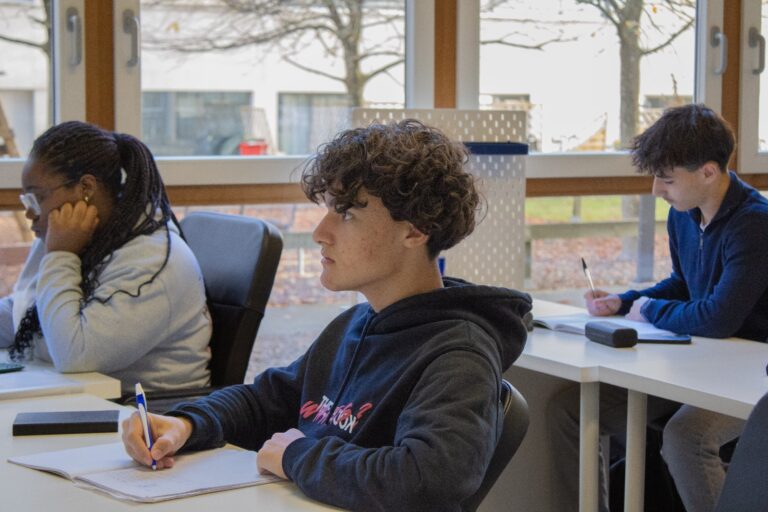
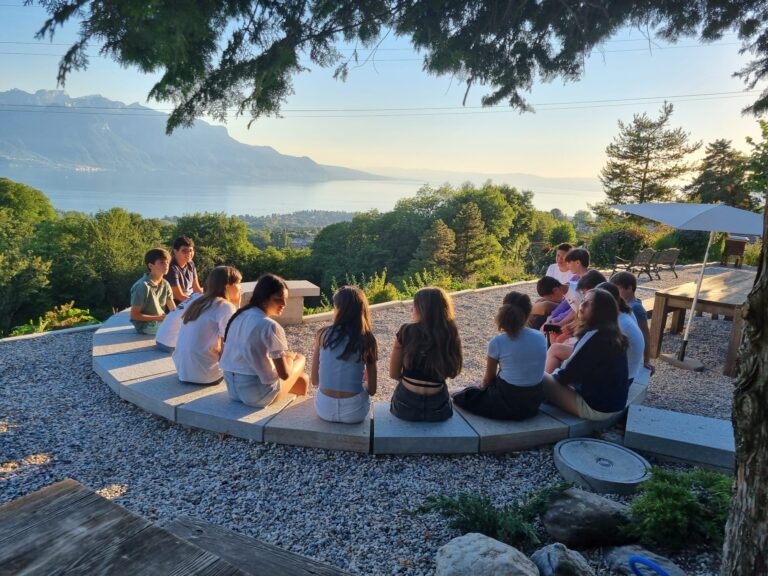
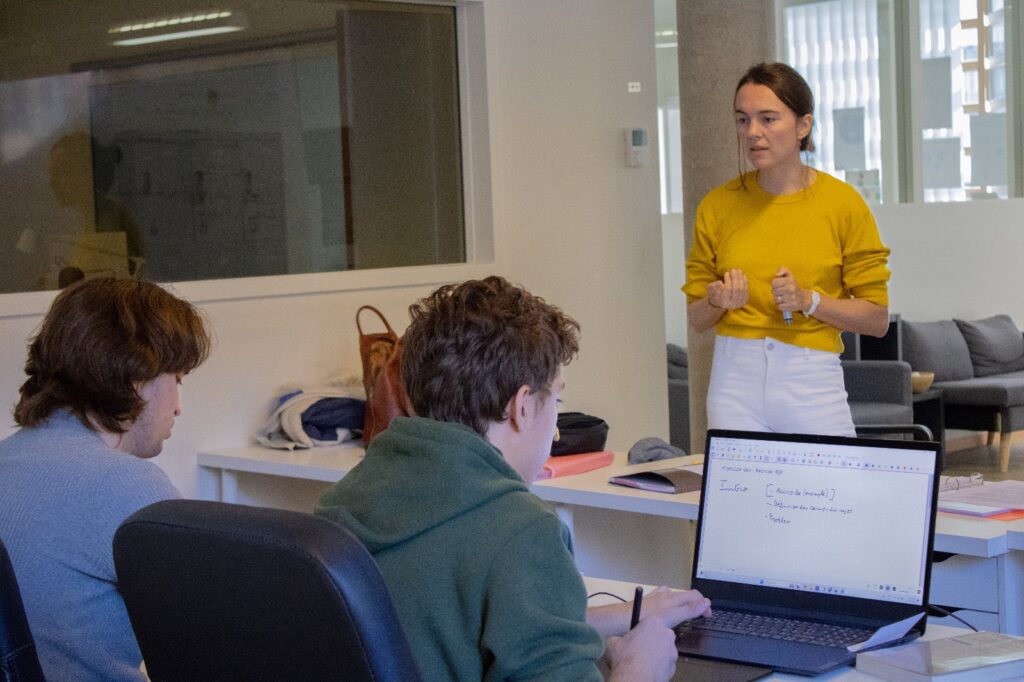
Chantemerle is a family-run boarding school in Blonay, above Lake Geneva, in the French-speaking part of Switzerland. Immersion students join the school’s regular students in classes, activities and everyday life. They are not placed in a separate group for international students, which is what makes the immersion real.
- Intensive French lessons in small classes, with teaching adapted to each student’s level.
- Preparation for the official DELF exams.
- Non-linguistic subjects taught in French, including science, history and geography, and an advanced Swiss track in mathematics and physics.
- Continuity with the home curriculum in mathematics, science and English, so students keep up academically.
Families looking for English rather than French can choose the English immersion programme, which prepares students for Cambridge English ESL qualifications. German is also available.
How long should a French immersion stay be?
This is the first question families ask, and the answer depends on the goal. One month is enough to unlock speaking and build confidence. A term or more turns French into a working language, and a full year prepares a student for long-term integration into a French-speaking curriculum.
| Length | Tuition and 7-day boarding | Realistic goal |
|---|---|---|
| 1 month | CHF 5,950 | Speak with more confidence and discover boarding life |
| 1 term (3 months) | CHF 17,850 | Follow lessons in French and prepare for a DELF exam |
| 1 semester (5 months) | CHF 29,750 | Work comfortably in French across all subjects |
| Full academic year | CHF 59,500 | Master the language and prepare a lasting move into French-speaking schooling |
These fees include tuition, 7-day boarding with weekends, and full board. The full breakdown, including what is charged separately, is on our fees page.
French does not stop after class
Immersion happens as much outside lessons as during them. At the boarding house, evenings, meals and weekends are shared with the other students, in French. This is where students learn what no textbook teaches: humour, everyday expressions, and how to say no politely.
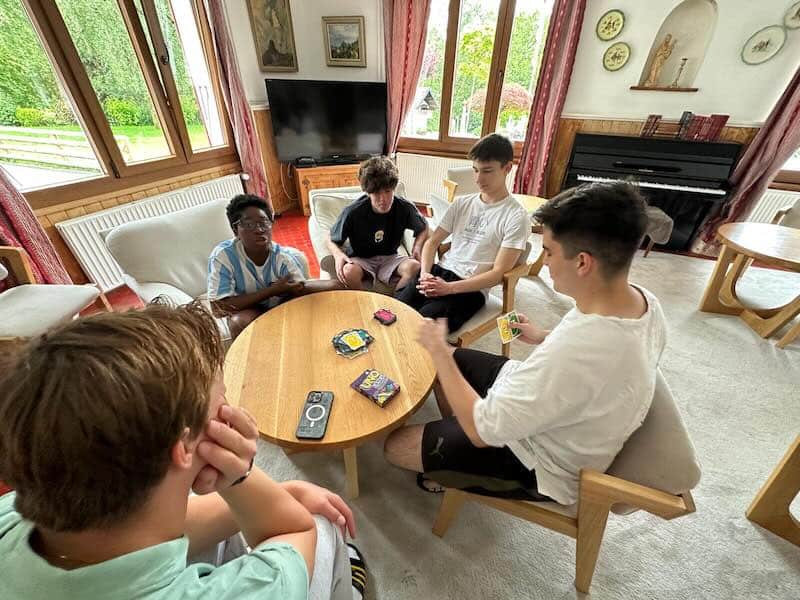
The after-school programme is included: team sports, creative workshops and outdoor adventures. Students who want to train more seriously can join a Swiss league club or academy in football, tennis, golf or horse riding. In winter, nearby resorts (Portes du Soleil, Villars, Zermatt) make skiing and snowboarding part of school life, with regular outings in the mountains.
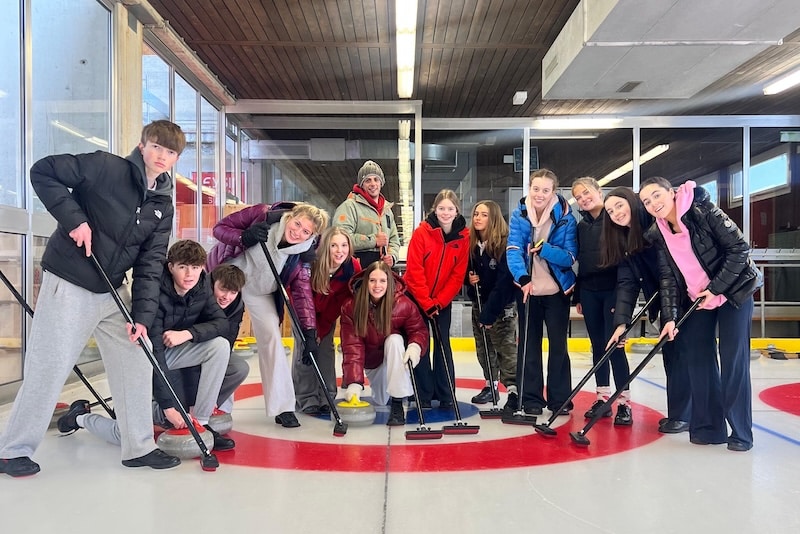
Cultural excursions and study trips complete the picture, and turn French into a passport rather than a school subject.

What is included, and what is not
Comparing immersion programmes only makes sense if you compare like with like. A French immersion stay at Chantemerle includes:
- full board, meals and accommodation;
- the full academic programme and all school materials;
- full supervision and care;
- supervised homework and remedial support;
- the after-school programme of sports, arts and nature.
Charged separately, and stated from the start: a compulsory, non-refundable down payment of CHF 800, insurance, the ski pack, study trips and private transport outside planned trips (Geneva airport: CHF 200 per trip). A school that publishes this level of detail saves you unpleasant surprises.
Six questions to ask before choosing a French immersion programme
- Will my child be in class with the school’s regular students, or only with other international students?
- Are the language groups genuinely small, and is the level assessed on arrival?
- Does the stay prepare students for a recognised qualification such as the DELF?
- How is the home curriculum maintained, so my child is not behind when they return?
- Who looks after my child in the evenings and at weekends, and what is life like outside lessons?
- What exactly is included in the price, and what will be invoiced on top?
A serious school answers all six without hesitation, and in writing.
After immersion: a first step, if you wish
For some students, French immersion is a few months abroad. For others, it is the start of a longer journey. It often lays the foundation for the Swiss Matura, which opens the doors of Swiss universities. Students who arrive for English immersion move naturally towards IGCSE and A Levels.
Either way, the transition happens without changing school, with teachers who already know the student. That is one of the advantages of a small, family-style boarding school: an immersion stay can become, if the family wishes, the first step of a complete education.
Want to know more? Contact the school to plan the right French immersion stay for your child.
Frequently asked questions
The school management answers the questions families ask most often.
What is French immersion?
French immersion means learning French by living in it: French becomes the language of lessons, meals, activities and friendships. At Chantemerle, immersion students take intensive French lessons and join regular students in classes, activities and boarding life.
How long should a French immersion stay last?
One month is enough to build speaking confidence. A term or a semester turns French into a working language and prepares students for a DELF exam. A full year prepares a lasting move into French-speaking schooling. Chantemerle offers stays from 4 weeks to a full academic year.
How much does French immersion at a Swiss boarding school cost?
At Chantemerle, tuition and 7-day boarding cost CHF 5,950 for one month, CHF 17,850 for a term, CHF 29,750 for a semester and CHF 59,500 for a full academic year. The down payment, insurance, the ski pack, study trips and private transport are charged separately.
Will my child fall behind at school?
No. Alongside intensive French, students continue their home curriculum in mathematics, science and English, so they keep up academically and avoid repeating a school year.
Is French immersion only for beginners?
No. Teaching is adapted to each student’s level in small classes, from beginners to students preparing higher DELF levels or following subjects such as science, history and geography in French.