
Archery, precision as a lesson
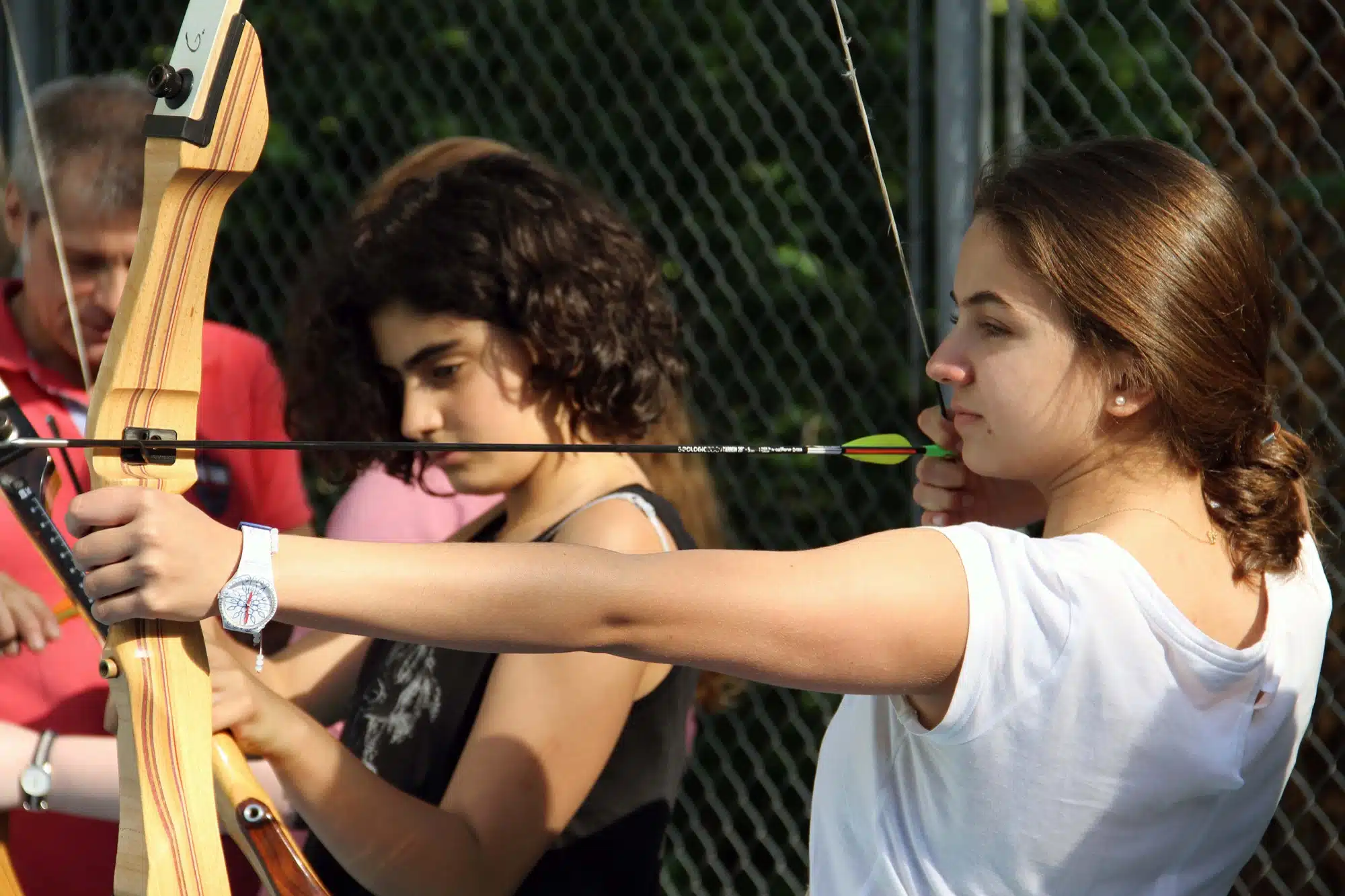
Our students shoot once a week. The first thing they discover is that strength is useless. A bow held badly by an annoyed child will never find the target, however much energy goes into it.
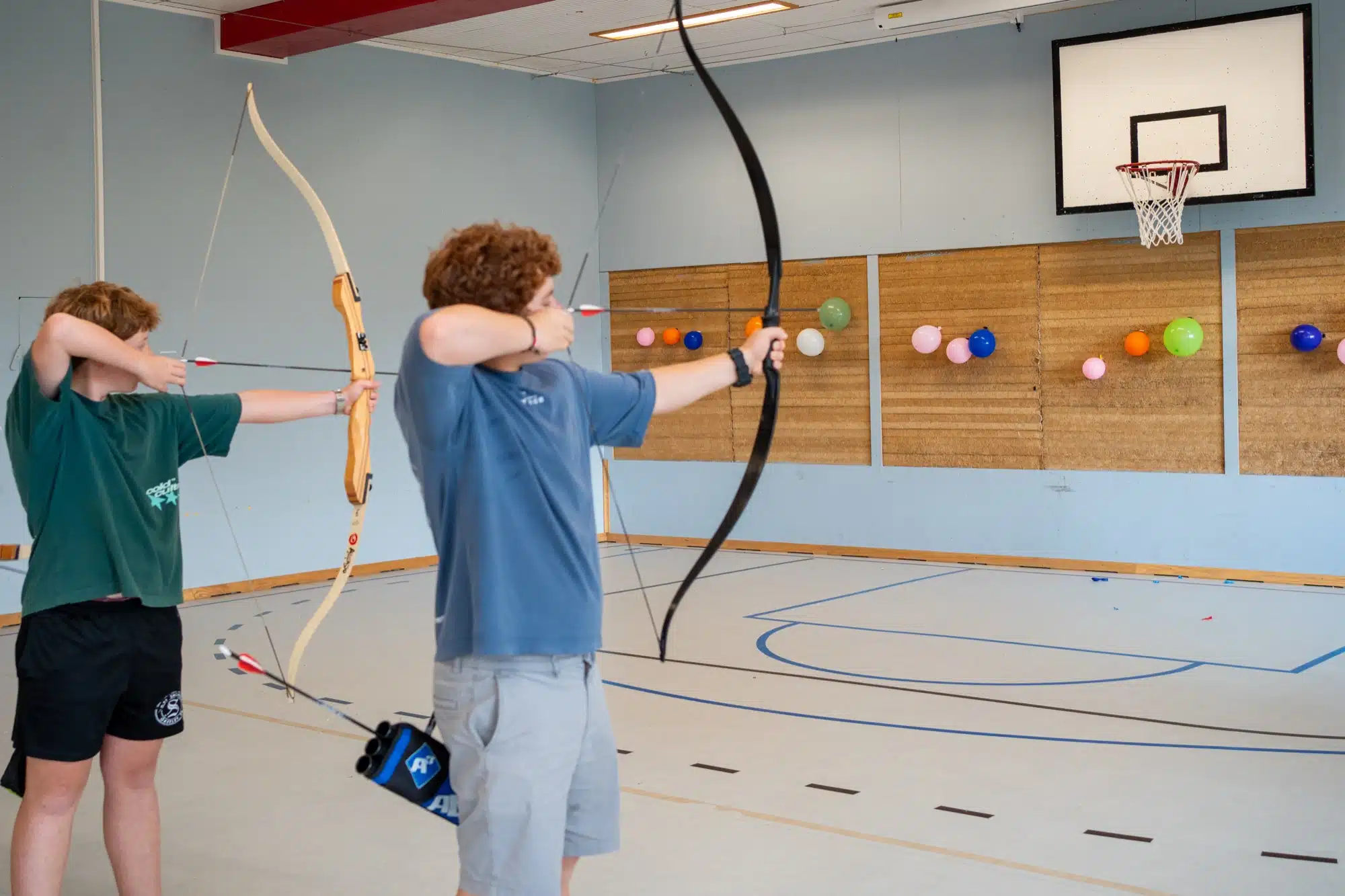
The movement imposes its own discipline. Stand, breathe, aim, release. Each step has to wait for the one before it. A child who rushes sees it immediately in the result, without any adult having to point it out. That direct, unjudging feedback is what makes the activity so effective.
Beyond accuracy, the practice builds:
- concentration and sustained attention;
- coordination and precision of movement;
- self-control and emotional regulation;
- patience and perseverance;
- confidence, fed by visible progress.
Archery has another merit, rarer than it sounds: the child competes only against themselves. There is no team to win, no faster classmate. There is their previous arrow, and the one they are about to shoot. For a child whom comparison inhibits, that solitude is a release.
Chess, strategy and anticipation
The chess club meets three times a week. That regularity changes everything: it turns an occasional game into real practice, with progress you can measure from one month to the next.
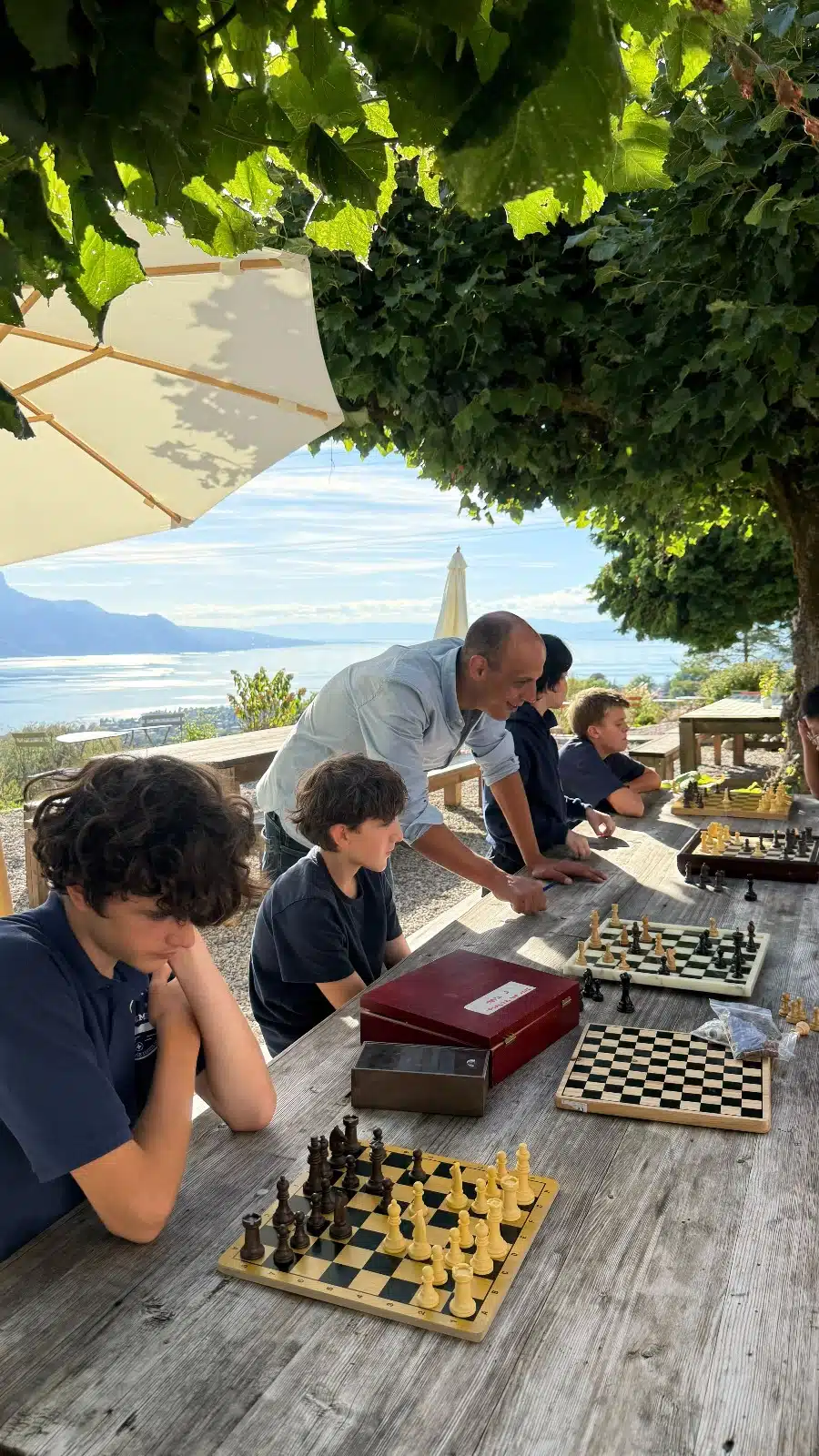
At a chessboard a child learns something school rarely teaches head-on: their decisions have consequences, and those consequences belong to them. Nobody can play the move for them. They have to read the position, weigh several continuations, choose, then live with what follows.
Regular play develops:
- concentration over a long stretch;
- logical reasoning and strategic thinking;
- memory and the ability to anticipate;
- patience and tolerance of frustration;
- independent decision-making.
Losing holds a special place here. In chess you lose often, and never by accident. A child who replays the game sees where it went wrong. Learning to analyse a defeat without being discouraged is probably the most transferable thing the game teaches, in the classroom and well beyond it.
Competition, for those who want to go further
The club also opens the door to tournaments. It is not compulsory, and not every student wants it.
For those who take it on, the experience is of a different order. Facing an unknown opponent, handling the pressure of a clock, holding concentration through a long game: school does not reproduce those conditions. Every game becomes a chance to improve, including the ones that are lost.
Two activities, one shared skill
Archery and chess ultimately train the same thing: the ability to settle before acting.
With a bow, a child learns to control their body, their movement and their breathing. At the board, they learn to observe, analyse and anticipate. One works on physical stillness, the other on mental stillness. Together they cover both sides of the same capacity.
A child who can hold still for three seconds before releasing a bowstring is the same child who will reread a question before answering it.
In both cases the child discovers the value of patience, precision and perseverance. And they discover it through experience, not because an adult explained it.
Where they fit in our approach
Neither activity is an end-of-day filler. Both belong to an approach that gives real space to slow gestures, to effort away from screens, and to skills that no mark measures.
The same logic runs through our activity programme, across sport, arts and nature: giving children varied ground on which to find their strengths, sometimes where they least expected them. A student who is quiet in class can turn out to be formidable at a chessboard. That discovery is worth as much as a lesson.
To see what daily life looks like here, between lessons, activities and boarding, or simply to ask us about our programmes, get in touch.
Frequently asked questions
The school management answers the questions families ask most often.
At what age can a child start archery?
From primary school, with equipment matched to their size and strength. Archery demands no particular power: a bow held badly by an annoyed child will never find the target, however much energy goes into it. Calm and a consistent movement make the difference, not muscle.
Is archery safe for children?
Yes, provided it is supervised. Sessions run under an adult's supervision with strict safety rules on where archers stand, when they shoot and how arrows are collected. Those rules are part of the learning: waiting for the signal before shooting is itself an exercise in self-control.
Does chess actually help children at school?
Chess trains skills that transfer to the classroom: concentration over long stretches, logical reasoning, memory, anticipation and tolerance of frustration. No single activity raises marks on its own, but a child who learns to analyse a lost game without being discouraged naturally applies the same method to an exercise they got wrong.
How often do these activities run at Chantemerle?
Archery takes place once a week. The chess club meets three times a week. That regularity is deliberate: it turns an occasional game into real practice, with progress you can measure from one month to the next.
Do you need any experience to join the chess club?
No. The club welcomes complete beginners alongside more experienced players. Students who want to go further can then enter tournaments, facing unknown opponents and learning to handle the pressure of a clock. It is not compulsory, and not every student wants it.
Are these activities included in the school fees?
Yes. Archery and the chess club are part of the full extracurricular programme of sport, arts and nature included in tuition, for day students and boarders alike. Some options are invoiced separately, such as sports academies or private lessons, and these are detailed on our fees page.